
The Lakota term Inípi (or Inipi) translates to “to live again.” It is one of the Seven Sacred Rites of the Lakota people and serves as a profound purification ceremony. Participants enter a state of humility, cleanse body, mind, and spirit, and experience a kind of spiritual rebirth. In traditional times, the Inipi was performed before any significant undertaking—to purify the body, gain strength, and connect with the powers of the universe: Earth, Water, Fire, and Air.
The Inipi is often described as returning to the womb of Mother Earth. The lodge itself symbolizes this sacred space of gestation and re-creation, where the “Stone People” (heated rocks, called Grandfathers) bring the life-giving heat and steam.
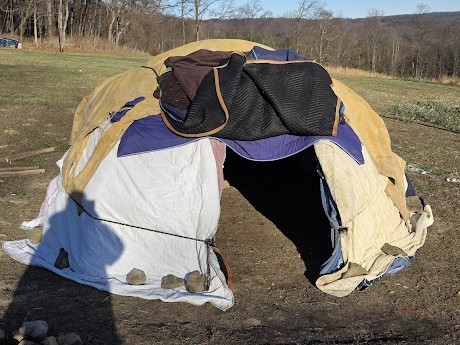
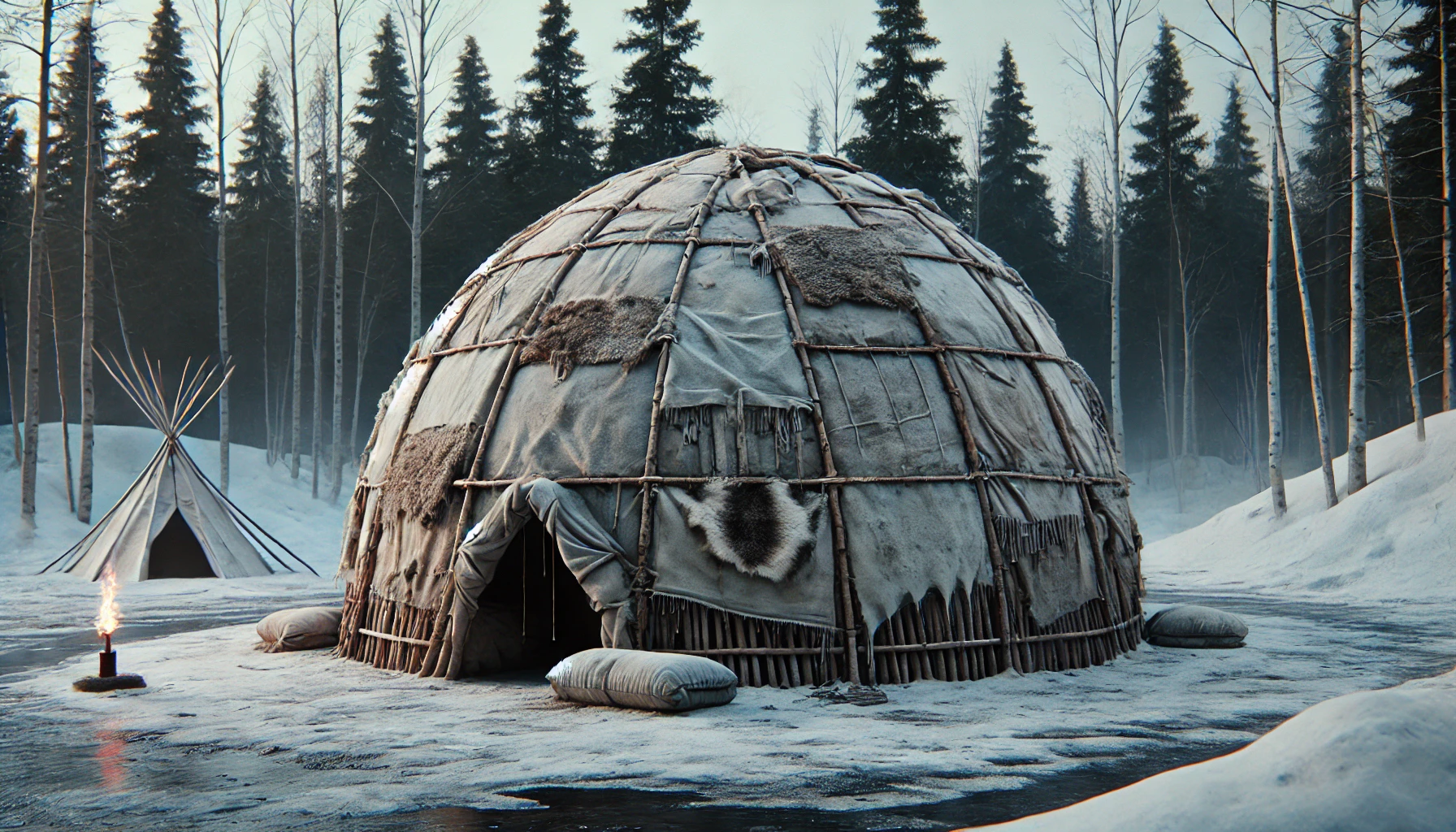
Structure of the Inipi Lodge
The lodge is a low, dome-shaped structure typically built with 16 young willow saplings placed in a circle and bent to form the frame. It is traditionally covered with hides, blankets, or tarps so that no light enters—creating an environment of deep introspection. The entrance usually faces west (in many Lakota traditions) or east, depending on the specific teaching.
Outside the lodge:
- A sacred fire pit heats the stones (Grandfathers).
- An earth mound (altar) sits near the door.
- The fire represents the sun; the surrounding area evokes the cosmos.
Prayers and smudging (with sage, sweetgrass, or cedar) accompany every stage of construction and preparation.
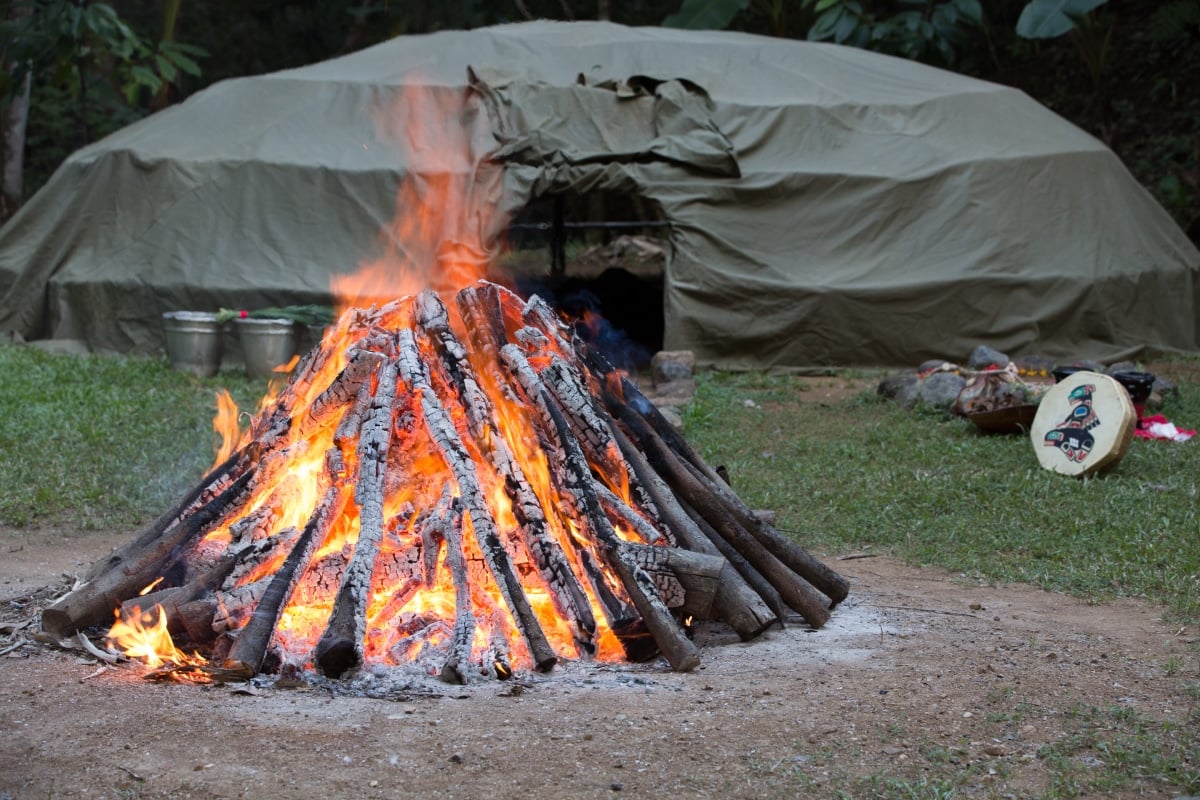 Above: The sacred stones are carefully surrounded by Above: wood stacked in a cone shape. This traditional method creates strong airflow and intense heat, allowing the fire to burn hot enough to bring the Grandfather stones to a glowing red temperature. pachamama.com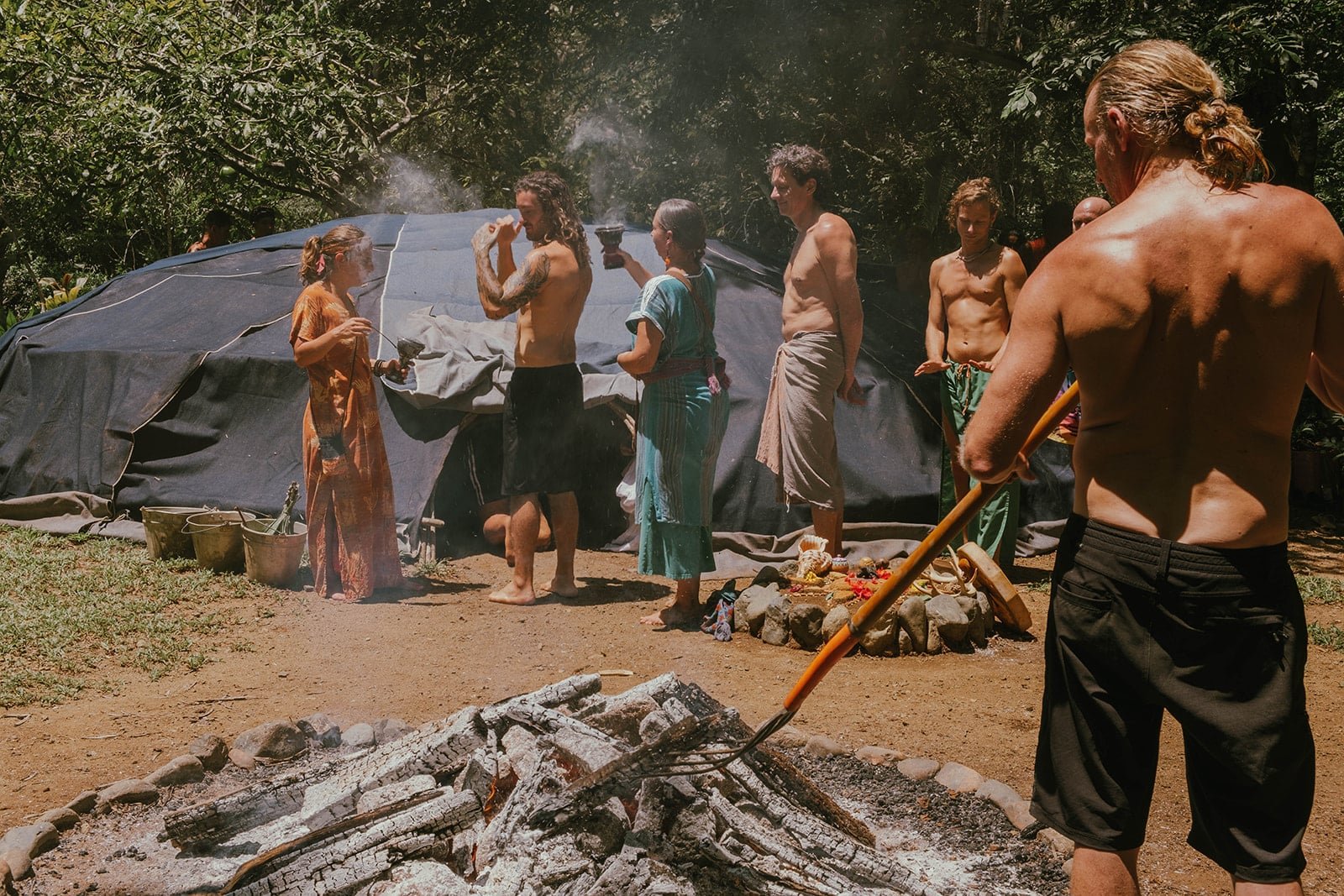
How the Ceremony Unfolds
The Inipi is led by an experienced ceremonial leader (often called the one who “pours the water”), assisted by a fire keeper. It typically consists of four rounds (or “doors”), during which the door flap opens four times to bring in more heated stones and water.
Preparation — Participants are smudged. They remove jewelry and enter humbly by crawling in on hands and knees, saying “Mitakuye Oyasin” (“All my relations” or “We are all connected”). Men and women sit in a circle on sacred sage. Clothing is modest and breathable (shorts for men; long skirts/dresses and modest tops for women).
The Rounds — Heated stones are placed in the central pit. Water is poured over them to create intense steam and heat. Each round focuses on prayers to the directions:
- West (Horse Nation / Water)
- North (Buffalo Nation / Earth)
- South (Eagle / Winged Nation / Renewal & Fire)
- East (and prayers for ancestors/those who have crossed over)
Songs, prayers, and sometimes the sacred pipe (Chanupa) are shared. The heat and darkness facilitate deep emotional, physical, and spiritual release. Discomfort is often viewed as part of the healing—offering for oneself or others.
Closing — After the final round, participants emerge from darkness into light, symbolizing liberation and renewal. All that is impure is left behind. The pipe may be smoked, and a shared meal (potluck) often follows for integration and community.
The entire ceremony, including preparation and sharing afterward, can last several hours. It emphasizes prayer for all life, healing, and reconnection.
Important Protocols & Respect
The Inipi is a sacred ceremony, not a casual sauna. Traditional guidelines include:
- Offerings — Tobacco (in a red cloth pouch) is a common respectful gift to the leader or fire.
- Humility — No mundane talk inside; quiet voices, no eye contact or touching during intense moments.
- Practical — Remove metal jewelry (it gets hot). Bring a towel, change of clothes, and a blanket for after. No alcohol, drugs, or phones.
- Cultural considerations — Women on their moon cycle are traditionally asked not to participate (as it is a “gestating/holding” ceremony, while moon time is a shedding one). Children may participate depending on the leader.
- Leadership — Only those properly trained and authorized in the tradition should lead an Inipi.
Many elders emphasize that the ceremony belongs to the people and is offered with integrity when passed down carefully.
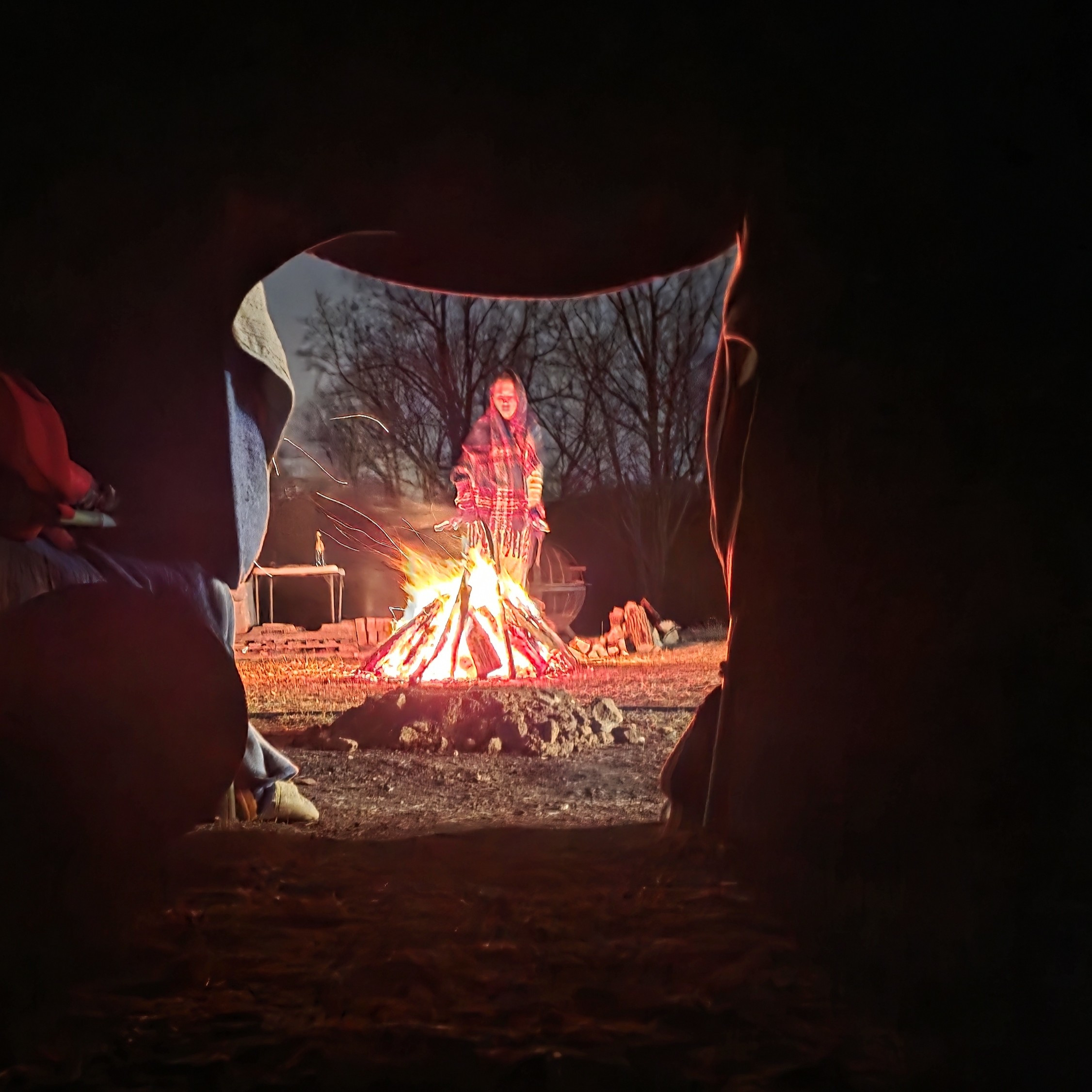 Above: A view from inside the Inipi looking toward the sacred fire in the west, where the Grandfather stones are heated until they glow a deep red before being carried one by one into the lodge."
Spiritual Significance
The Inipi draws on the interconnectedness of all things. By enduring the heat together in darkness, participants release toxins (physical and emotional), offer prayers, and emerge renewed—reborn with greater clarity, strength, and connection to creation. It is both deeply personal and communal, a place where one can pray for healing for oneself, loved ones, and all relations.
This is a living tradition. Experiences vary with the leader’s vision, but the core remains: purification, humility, prayer, and rebirth.
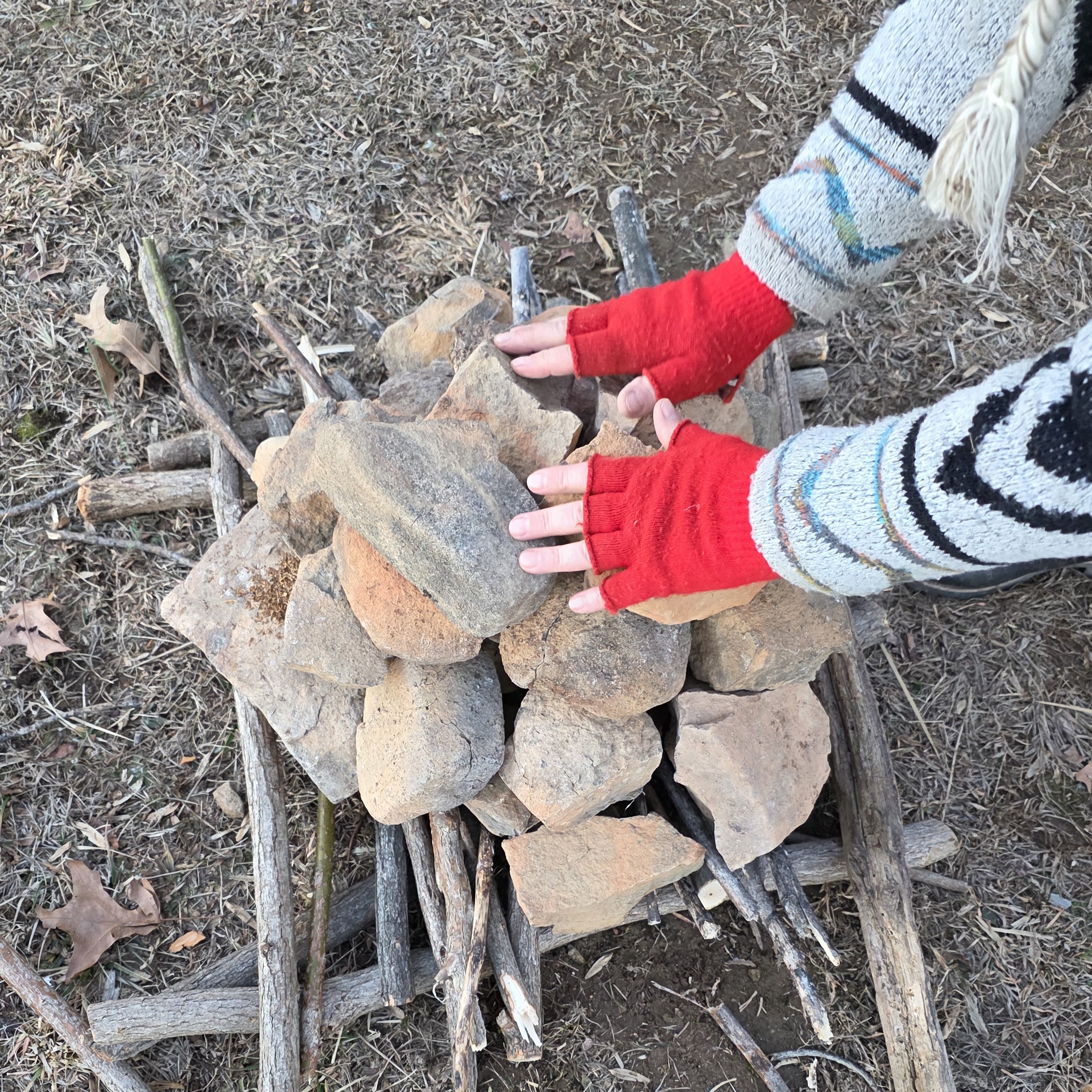
Above: The Grandfather stones resting where the sacred fire will be built atop them. They will be tended for nearly two hours until they reach a glowing red heat, ready for the ceremony.
We were fortunate to use local lava stones gathered from a rare and special location here on the East Coast — quite uncommon, since this part of the country has no volcanoes.